

Dewclaws! They are IMPORTANT! Many dog breeders routinely, and without much thought, amputate puppies’ front dewclaws when the pups are 3-5 days of age. Why? The thought is to prevent potential injuries, such as tears of the digit, later in life. BUT do you realize that the dewclaw is a FUNCTIONAL, IMPORTANT digit? As a Labrador Retriever breeder dewclaws use to be removed as standard protocol, but times have changed. I have educated myself over the years and with the new studies that have come out on the subject my own practices have changed and I’m happy for it. Do you also know that with appropriate exercises, the muscles of the dewclaw can be strengthened to help promote and maintain appropriate function and close apposition of the dewclaw to the side of the paw?
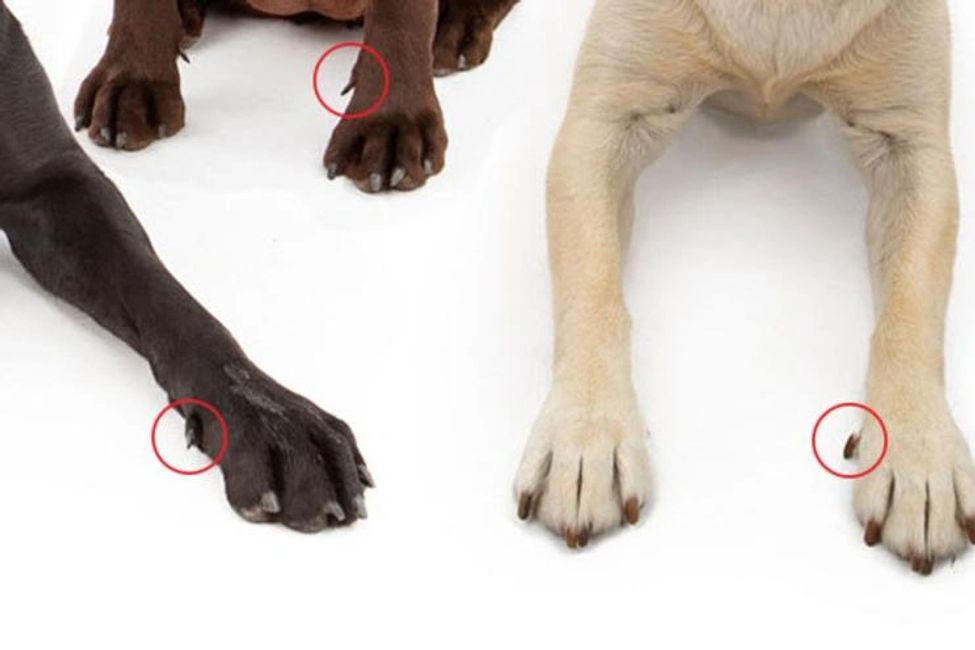
When it comes to our dogs, we often think about their paws as just a means for them to walk and run. However, many dog owners may not realize the importance of dewclaws in dogs. Dewclaws are the small, vestigial toes located on the inner part of a dog’s paw, higher up than the other toes. While some breeds have them removed at a young age for cosmetic reasons or to prevent injury, dewclaws actually serve a purpose and play a crucial role in a dog’s overall health and well-being.
One of the main functions of dewclaws is to provide dogs with added stability and traction. Dewclaws are positioned higher up on the paw, which allows them to grip the ground more effectively when running, turning, or navigating rough terrain. This extra toe can help dogs maintain balance and prevent slipping, especially in slippery or uneven surfaces. In some cases, dewclaws can also help dogs climb or grasp objects, making them particularly useful for working dogs or those who participate in activities like agility or obedience training.
Moreover, dewclaws can also act as a sort of “thumb” for dogs, allowing them to grasp and manipulate objects with more precision. For example, some dogs use their dewclaws to hold onto toys or bones while chewing, or to groom themselves more effectively. This additional digit can make certain tasks easier and more efficient for dogs, enhancing their overall dexterity and coordination.
In addition to their functional benefits, dewclaws also serve as a natural protective mechanism for dogs. The dewclaw is connected to the dog’s leg by a series of muscles, tendons, and ligaments, which provide support and stability to the entire paw. In some cases, dewclaws can help absorb shock and reduce strain on the dog’s leg joints, especially during activities that involve jumping or sudden movements. Furthermore, dewclaws can act as a first line of defense against injuries or infections, helping to shield the delicate area between the toes from external threats.
Arguments for Removing Dewclaws
1. The dewclaws will get injured. This is the most common reason heard for removing dewclaws. A friend of mine had such a severe dewclaw injury in one of her dogs that she swore she would remove them on all the dogs she bred subsequently.
But the data indicate that dewclaws are not injured very often. A study published in 2018 showed that the dewclaw was the LEAST likely toe to be injured in agility dogs, in which landing and turning from jumps and other obstacles put the toes at risk for injuries. Thus, it makes no sense to remove the dewclaws because of risk of injury. And, of course, no one would consider removing the 5th digits in the front feet, which are by far the most commonly injured toe.
2. Owners forget to trim the dewclaws. Surely this is a matter of education. Do we really want to remove a functioning digit in all dogs, just because some owners need to be reminded that they must remember to trim the dewclaws?
3. Dewclaws make the forelimb look less straight when viewed from the front in conformation. The AKC states: “The breed standard describes the characteristics of the ideal dog to perform the function for which it was bred.”
Dewclaws may seem insignificant compared to the rest of a dog’s anatomy, they actually play a vital role in a dog’s overall health and performance. As responsible breeders and pet owners, it is vital to understand the importance of dewclaws and consider their potential benefits before deciding to have them removed. By recognizing and preserving the function of dewclaws, we can help our canine companions stay healthy, active, and happy for years to come.